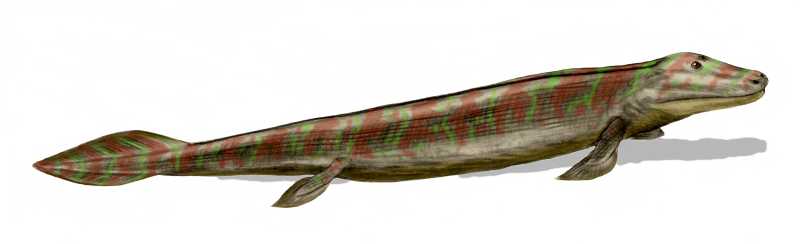
In Your Inner Fish, it explains about the relationships between humans and fish, the evolution of fish, the characteristics of fish, and how fish formed other decendants. We have many things in common which includes bony skeleton, backbones, skulls, and the connection between other species. The characteristics of fish is that they have a one bone, two bone and multiple bones pattern. Throughout this movie, scientists have researched and discovered about the characteristics of fish that had passed on to humans. This includes Dr. Jenny Clark's discovery in Greenland when she found a transitional Ichthestega and its movement. Another discovery was found by Dr. Neil Shubin and Dr. Ted Daeschler when they found a shoulder girdle of a fish that belonged to the stegas by a Pennsylvania highway and it showed how fish moved long time ago. Dr. Shubin also studied embryos and found out that they look like human ones and the last discovery made in the movie was Cliff Tabin's study of chick embryos and showed limb development and the "Sonic Hedgehog" gene which told different cells to do different jobs like growing limb like digits in chickens. Tiktaalik was a an important role in the decendants of fish. Their limbs helped form amphibians with eight fingers, reptiles that colonized land, primates that traversed through the trees and form the human hand. This relates to chordates vodcast as it explained about each taxonomy and its charateristics of species that are included in each type of taxonomy of chordates. The taxonomy for chordates is Agnatha, condricthyes, osteichyes, amphibia, reptilla, aves, and mammalia.
11. What is the "Sonic Hedgehog" gene responsible for?
A protein in the mammalian signal pathway called hedgehog. Mutations in the human sonic hedgehog gene cause holoprosensephaly type 3, a disorder in which the forebrain of the embryo fails to develop and results a loss of the ventral midline. Recently, the Sonic Hedgehog gene has been shown to act as a axonal guidance cue, a subfield to neural development that concerns the process of neurons sending out axons to reach correct targets.
14. What did Tiktaalik use its neck for in the water?
It uses it neck to help hunt for prey. It also helped support its body and help breathe.
Friday, April 29, 2016
Friday, April 15, 2016
Jellyfish
Jellyfish are a non polyp individuals that belong to the phylum, Cnidaria. This relates to the invertebrates vodcast because it's a animal from Cnidaria and share many traits of a Cnidaria. They are free swimming marine animals that have a bell shaped like an umbrella and have stinging tentacles that can kill prey. Jellyfish have occurred for at least 500 million years and are the oldest multi organ animal alive. There are four classes of jellyfish that belong to the Cnidaria. They are scyphozoa, cubozoa, hydrozoa, and staurozoa. There are 200 species of scyphozoa, 20 species of Cubozoa, 50 species of staurozoa and 1000-1500 species of hydrozoa jellyfish. The unique part of a Jellyfish is that they are useful for many resources that we use today. They are used for an appetizers that are served in restaurants. They are prepared by putting sesame oil and chili sauce. Another part of a Jellyfish that make them unique is that their glowing goo can be used to power medical devices. Their digestive, circulatory, respiratory, nervous and osmoregulatory are not very specialized. Jellyfish's bell height can range from a millimeter to two meters tall and their lifespan is from a few hours to several months.
Thursday, March 24, 2016
Unit 8 Reflection
This unit relates to these blog posts
Hunger Games lab
Bird Beak Lab
In Unit 8, we learned about the constant change in our world. It includes the gradual change over time, natural change, gene pool, speciation, structural evidence of evolution, evolution in populations, and the origin of life. We have also done some fun labs during this unit. The gradual change over time includes variation which is any difference in traits within a population and exists because of meiosis, mutations and sex cross over. Artificial selection occurs in the gradual changes as it occurs when humans select a certain trait from a certain population that they want and mate individuals with the certain trait that was chosen. This results in species changing over time and a new breed is created. Natural change is about Charles Darwin's observations and conclusions. He discovered that evolution is caused by natural selection.
He made 4 observations about evolution that is caused by natural selection. The observations are that all species that sexual reproduce have a high genetic variation in traits, traits are inherited from parents to offspring, all species are capable of producing more offspring that the environment can suppor
t, and competition is stiff. The conclusions he made were that there are winners and losers and populations are the winners. In swimming in the gene pool, it's about the total of all alleles in a population. It includes genetic variation, and change in gene pool when allele combination when individuals of the population have offspring. Allele frequencies measures genetic variation. Allele frequency is how common an allele is in a population and can be calculated for each allele in a gene pool. The steps for determining the allele frequency is adding up the total for all alleles, adding up the total for each type of alleles, and dividing the number by its total. Natural selection in a gene pool favors on a certain phenotype. The better phenotypes survive and reproduce. Winners pass on their alleles to their offspring. Also, lethal alleles stick around. If they are recessive, they will stick around and can be beneficial if condition changes.
Speciation is about how species form. It is the rise of two or more species from an existing specie. It's caused when a population is split into two and eventually the two populations cannot reproduce. There are many causes of speciation which include behavioral, geographic, and temporal isolation. These can cause speciation to occur depending on its behaviors, geographic location, and timing of speciation. Speciation over time can cause new species to rise and can have common ancestors. The decendents have common traits that are given to the new species. There are two patterns of speciation which include graudualism,
and punctuated equilibrium. Gradualism occurs slowly, but new species arise. In punctuated equilibrium, new species rise suddenly as speciation occurs quickly due to sudden reproductive isolation. In structural evidence, there are many types of evidence that relate to evolution. It includes developmental evidence which includes embryology, which studies similar stages of embryo development, and evo devo which is the study of evolution in a developmental process. Another type of evidence is vestigial structures which is when evolution has leftovers and adaptation are benefit ancestors and are no longer needed in decendants. Another good type of evidence is fossils which can show change over time. Index fossils are species that are understood well and used for comparison. There are also many types of structures that relate to the body parts in a specie. In evolving populations there are many types of change that changes natural selection. They are directional selection, stabilizing selection, and disruptive selection. Another type of change includes genetic drift which is when a random event changes a population and results in a change in allele frequency, gene flow which moves alleles from one population to another, mutations, which produce new genetic variation that natural selection can act on, sexual selection, which selects certain traits to give to other species to improve mating success, and natural selection which selects traits that gives an advantage for survival. In the origin of life,it shows how life is formed. It's shown by abiotic synthesis or small organic molecules, joining them, forming macromolecules, packaging molecules into protocells, and origin of self replication molecules. It was discovered by Stanley Miller and Harold Urey when they showed that abiotic synthesis of organic molecules in reducing atmosphere is possible. A geologic time scale is for breaking down time periods in a time line. There are several era in the geologic time scale that covers from the formation of Earth to now. Earth has changed rapidly throughout the years.
In this unit, we've done many labs relating to this unit. We did the hunger games lab, and the bird beak lab. The hunger games lab covered the swimming in the gene pool vodcast as we collected food and created more offspring by allele frequency. In the bird beak lab, this related to change, its all natural vodcast as it covered Darwin's observation and conclusions. In this lab, we've picked up food using different types of beaks. We would count our food after a certain time limit and determine how many offspring were made. The more food picked up, then more offspring would be made.
In this unit, I want to learn about the how the Earth has changed rapidly besides the formation of the Earth. I have been more assertive especially doing group work, but still need to improve. I am still sometimes passive and I need to speak up more than before. I need to have more eye contact when I talk to others.
Hunger Games lab
Bird Beak Lab
In Unit 8, we learned about the constant change in our world. It includes the gradual change over time, natural change, gene pool, speciation, structural evidence of evolution, evolution in populations, and the origin of life. We have also done some fun labs during this unit. The gradual change over time includes variation which is any difference in traits within a population and exists because of meiosis, mutations and sex cross over. Artificial selection occurs in the gradual changes as it occurs when humans select a certain trait from a certain population that they want and mate individuals with the certain trait that was chosen. This results in species changing over time and a new breed is created. Natural change is about Charles Darwin's observations and conclusions. He discovered that evolution is caused by natural selection.
He made 4 observations about evolution that is caused by natural selection. The observations are that all species that sexual reproduce have a high genetic variation in traits, traits are inherited from parents to offspring, all species are capable of producing more offspring that the environment can suppor
t, and competition is stiff. The conclusions he made were that there are winners and losers and populations are the winners. In swimming in the gene pool, it's about the total of all alleles in a population. It includes genetic variation, and change in gene pool when allele combination when individuals of the population have offspring. Allele frequencies measures genetic variation. Allele frequency is how common an allele is in a population and can be calculated for each allele in a gene pool. The steps for determining the allele frequency is adding up the total for all alleles, adding up the total for each type of alleles, and dividing the number by its total. Natural selection in a gene pool favors on a certain phenotype. The better phenotypes survive and reproduce. Winners pass on their alleles to their offspring. Also, lethal alleles stick around. If they are recessive, they will stick around and can be beneficial if condition changes.
Speciation is about how species form. It is the rise of two or more species from an existing specie. It's caused when a population is split into two and eventually the two populations cannot reproduce. There are many causes of speciation which include behavioral, geographic, and temporal isolation. These can cause speciation to occur depending on its behaviors, geographic location, and timing of speciation. Speciation over time can cause new species to rise and can have common ancestors. The decendents have common traits that are given to the new species. There are two patterns of speciation which include graudualism,
and punctuated equilibrium. Gradualism occurs slowly, but new species arise. In punctuated equilibrium, new species rise suddenly as speciation occurs quickly due to sudden reproductive isolation. In structural evidence, there are many types of evidence that relate to evolution. It includes developmental evidence which includes embryology, which studies similar stages of embryo development, and evo devo which is the study of evolution in a developmental process. Another type of evidence is vestigial structures which is when evolution has leftovers and adaptation are benefit ancestors and are no longer needed in decendants. Another good type of evidence is fossils which can show change over time. Index fossils are species that are understood well and used for comparison. There are also many types of structures that relate to the body parts in a specie. In evolving populations there are many types of change that changes natural selection. They are directional selection, stabilizing selection, and disruptive selection. Another type of change includes genetic drift which is when a random event changes a population and results in a change in allele frequency, gene flow which moves alleles from one population to another, mutations, which produce new genetic variation that natural selection can act on, sexual selection, which selects certain traits to give to other species to improve mating success, and natural selection which selects traits that gives an advantage for survival. In the origin of life,it shows how life is formed. It's shown by abiotic synthesis or small organic molecules, joining them, forming macromolecules, packaging molecules into protocells, and origin of self replication molecules. It was discovered by Stanley Miller and Harold Urey when they showed that abiotic synthesis of organic molecules in reducing atmosphere is possible. A geologic time scale is for breaking down time periods in a time line. There are several era in the geologic time scale that covers from the formation of Earth to now. Earth has changed rapidly throughout the years.
In this unit, we've done many labs relating to this unit. We did the hunger games lab, and the bird beak lab. The hunger games lab covered the swimming in the gene pool vodcast as we collected food and created more offspring by allele frequency. In the bird beak lab, this related to change, its all natural vodcast as it covered Darwin's observation and conclusions. In this lab, we've picked up food using different types of beaks. We would count our food after a certain time limit and determine how many offspring were made. The more food picked up, then more offspring would be made.
In this unit, I want to learn about the how the Earth has changed rapidly besides the formation of the Earth. I have been more assertive especially doing group work, but still need to improve. I am still sometimes passive and I need to speak up more than before. I need to have more eye contact when I talk to others.
Wednesday, March 23, 2016
Geologic Timeline Reflection
1. The three major events in Earth's history is the extinction of dinosaurs, cyanobacteria, and the evolution of land plants. The evolution of land plants changed Earth's landscape and created more habitats for animals to live in. The extinction of dinosaurs marked the end of the cretaceous and began the paleogene period. Cyanobacteria created photosynthesis, which led to the creation of oxygen and the reduction of carbon dioxide.
2. It includes many geological time periods that helped form the Earth today. The thing that surprised me was the amount of time periods there were that helped form Earth. I had never knew that there were several time period. I only knew a few of them and now I know there are lots of time periods that occured before the modern day.
3. We have impacted Earth in a short time by natural resources producing in Earth. It includes the formation of rocks, rivers, landscapes and more where organisms can live well there.
Tuesday, March 15, 2016
Hunger Games Final Analysis
1. In this lab, we determined the change in allele frequency. It simulated the percentage of species with certain traits by the alleles.
2. Knucklers because they passed their genes better. The chances of getting a knuckler from mating was 50%, the chance of getting a pincher was 25% and the chance of getting a stumpy was 25%.
3. My hypothesis was if species survive in an environment over time, then evolution will occur. My hypothesis was correct. According to graphs we made, the "a" allele was more frequent than the the "A" allele. After the first trial, the frequency for "a" were more frequent than the "A" allele. This happened because more pinchers(aa) were produced than stumpys(AA). For example, In the second trial the frequency for the "A" allele was 37% and the frequency for the "a" allele was 63% in the third trial, the frequency of the "A" allele was 19% and the frequency for the "a" allele was 81%. Population evolved over time because of the amount of stumpys, knucklers, and pinchers were different for every trial. More knucklers produced over time than the pinchers and the stumpys. Natural selection had caused species to change over time by evolution. This was caused when the knucklers survived better in the environment than the stumpys and pinchers and more knucklers were produced than the other two phenotypes.
4. The things that were random was the sizes of people's pockets. People with bigger pockets could pick up more food and the people with small or no pockets could not pick up as much food as they could which resulted into evolution of populations that had bigger pockets than other and could survive better in the environment. Another thing that was random in the lab was where the food was placed during rounds. Most of the time, food was placed around the area, but sometimes, the food was placed in one spot or in a few spots which made it easier for people who were near the area with a lot of food get food easily and the ones that get more food survive and produce more offspring better than others. Another thing that was random in the lab was the places people were. Every round, people were in different places around the area and when every round would start, the people who were near the food got more of an advantage to get more food. The things that were nonrandom was the mate choice and trait. At the end of each round, we would pair up with other species with same or different genotypes and flip a coin to figure out what the offspring would be by determining the genotypes and its trait. This affects evolution by how mate choice always occurs in evolution.
5. Yes, if the food amount was larger in an environment, more species with certain traits would survive better in the environment and more offspring will be made and if there was less food in an environment, less species with certain traits would survive and less offspring will be made.
6. Yes, there would be a different amount of species with certain phenotypes every round and the allele frequency would change.
7. The relationship between natural selection and evolution is that they both contribute to population change.
8. People competed with others for food, found spots with food with no one around them, pushing and shoving other people around for food and pick up more food at once This would affect the allele frequency by increasing the frequency for each allele.
9. In evolution, the species and allele frequency change and natural selection acts on unneeded organisms like genotype and phenotype because natural selection weeds out populations by their traits. Evolution is made to change populations over time.
10. None
Saturday, March 5, 2016
Bird Beak Lab
In the Bird Beak lab, the question was if natural selection occurs in a population, then how do changes in selective pressures affect the evolution of the species. My hypothesis was if natural selection occurs in a population, then less offspring will be created for each bird beak. In this lab, our group used different types of beaks to grab different types of food. The types of food that were included in this lab was seeds(macaroni, and paper clips), leaves(rubber bands), and toothpicks(seed pods). We did an experiment where we excluded toothpicks and were given 30 seconds to grab food from the table and count them up to determine how many children were made from each type of beak This was repeated 3 times. At the end, my hypothesis was incorrect. The results were about the same as our part one solution. The spoon beak bird raised one chick, the binder clip beak bird raised 16 chicks, the scissor beak bird raised 11 chicks, and the tweezer beak bird raised 19 chicks. This was caused by how we had other types of food to rely on. The bird beaks heavily relied on getting leaves, and seeds. The seeds pods were not beneficial for the bird beaks.
An error that could have occured during this experiment was counting how much food we had each round. We may have miscounted the amount of food we had every round. This was caused by not counting the food carefully enough. The effect of this was that we had miscounted the amount of chicks raised and also the results from the whole experiment. A suggestion to reduce this error is to count carefully by five's or counting at least twice to make sure you counted right. Another error that could have occured in the experiment is the timing. During the rounds, we had 30 seconds to grab food from the table. We may have been given too much or little amount of time to find food. This was caused by not paying full attention to the time and as a result, our data may not have been accurate. This can be reduced by getting a timer that can stop at a certain time limit to get exact results.
The purpose of this lab was to show how different beaks adapt to different types of food in an environment. This relates to Darwin's observations and conclusions in the constant change vodcast. We learned about the four observations that Darwin made that relates to evolution and natural selection. We also learned about his two conclusions that he made which is there are winners and losers, and population looks like the winners. We used his two conclusions to determine our results.
Thursday, February 25, 2016
Unit 7 Reflection
This unit was about ecology. In ecology which is the study of interactions between organisms and their environment, we learned about the basics of ecology which includes the big ideas in ecology, the habitat, abiotic and biotic factors, and levels of organization. The big ideas in ecology include equilibrium which is when environments are heathiest when they are in balance and interdependence which is when all living things depend on another for survival. The types of habitats include the habitat which is all aspects of an area which the organism lives in which includes the biotic and abiotic factors. A niche includes all of the factors that a species needs to survive. The levels of organization is the organism, population, community, ecosystem, biome and biosphere. we learned about food chains and food webs. It includes producers and consumers that includes organisms that can get their food or produce it. The four types of animals are herbivores, carnivores, omnivores, and detritivore. A food chain shows how each organism get its energy and the food web is more accurate and shows that organisms can eat more than one thing. Trophic levels are levels in a food chin based on what each organism eats.
In the ecosystem energy vodcast, we learned about the units of energy which includes biomass which is a method of measuring energy which is measured in Joules. We learned about the energy pyramids which are pyramids shown to show how energy is transferred. The 10% rule is a rule that states that of the energy produced, 10% of it is going to the next level of the energy pyramid. If only 10% of energy is passed on, less and less energy is available for the top consumers. This results in fewer consumers and smaller populations at higher levels in the pyramid. We learned about population Ecology. It's the study of populations in relation to the environment. It includes the density and the dispersion of a population. Population Ecology includes the factors that affect populations which in cludes immigration and emmigration, births, deaths, disease, predators, abiotic factors , and population density and dispersion. It also includes exponential growth which is common among bacteria and viruses, cannot be sustained, and has a carrying capacity. A carrying capacity is the maximum population size that the environment can support. Lastly, population ecology includes the logistic growth model which is the rate of increase that slows as the carrying capacity is reached. Populations go through boom cycles. Also in population ecology, it includes human population. It's increased slowly until 1650 and grows exponentially. The carrying capacity on Earth is uncertain and has an average estimate of 10-15 billion.
We learned about Ecosystem recycling. It includes succession, order of succession, and nutrient cycles. Sucession includes ecological and primary. Ecological sucession is the sequence of community and ecosystem change and primary sucession occurs where succession begins with no soil. The order of succession is pioneer species, intermediate species, and climax communities. Pioneer species is grasses, lichens, and mosses. Intermediate species includes shrubs and trees. A climax community includes intermediate species reaches full maturity. Nutrient cycles include the carbon cycle, nitrogen cycle, water cycle and phosphorous cycle. We learned about Ecosystem health. It includes biodiversity, health, and caring for others lives. Biodiversity includes genetic diversity includes all of the different genes within a population and between different populatiions. Species diversity is a variety of species in an ecosystem or throughout the biosphere. Ecosystem diversity is the different types of ecosystems throughout the planet. Healthy facts include the discovery of millions of species extinct on Earth and other statistics that relate to the species and living things. Lives can be saved by medicines and ecosystem services. The causes of specie lost is by losing their habitat, introducing new species and overexploitation. Lastly, we learned about how to protect living things. We can do many things to save living things from dying. We can identify hot spots, protect what we have, planning smart to sustain populations, restoring populations from disturbances that have been made, and thinking globally and making better decisions to save wildlife.
I want to learn more about the ecosystem and why people throw plastics everywhere without knowing that organisms live in the area. I wonder why species are moved frequently to other habitats that they do not recognize well.
In the conservation biologist project, I learned methods on how to work well with groups. I learned to be more assertive to others to a task accomplished without frequent conflicts with other group members. The things that went well was getting the job done. My group was able to get the project done within the due date. Even though during the project, we lost a group member. We were able to get the job done without our missing group without hitting any obstacles along the way. The collaboration was great as it helped me work with groups in a more effective way.
Subscribe to:
Posts (Atom)

